Some Who Came Back

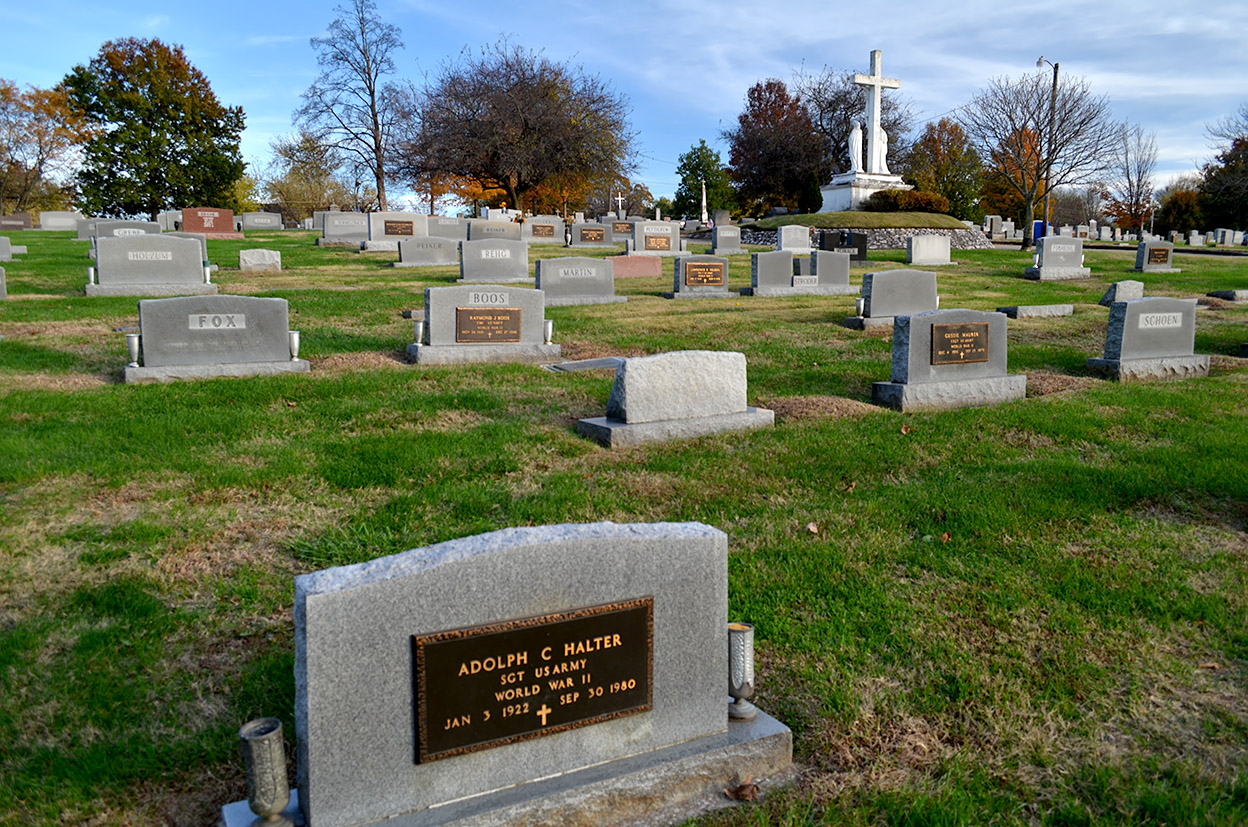
I was alone walking around in St. Mary’s Cemetery looking at graves of servicemen Friday afternoon. I was looking for a specific grave, but didn’t run across it.

What I did find in just about a third of the graveyard was the final resting place of many men who served in our country’s various conflicts, then came back to rejoin their community. Look at how many bronze markers are catching the late afternoon sun. You can click on the photos to make them larger. Here are just a few of the markers and the men they represent.

An obituary in The Southeast Missourian on Sept. 30, 1980, said that Adolph C. Halter had served in the Army in Europe. He worked as a mechanic at Ford Groves Motor Company until he retired due to ill health.

James Patrick “Pat” Tlapek
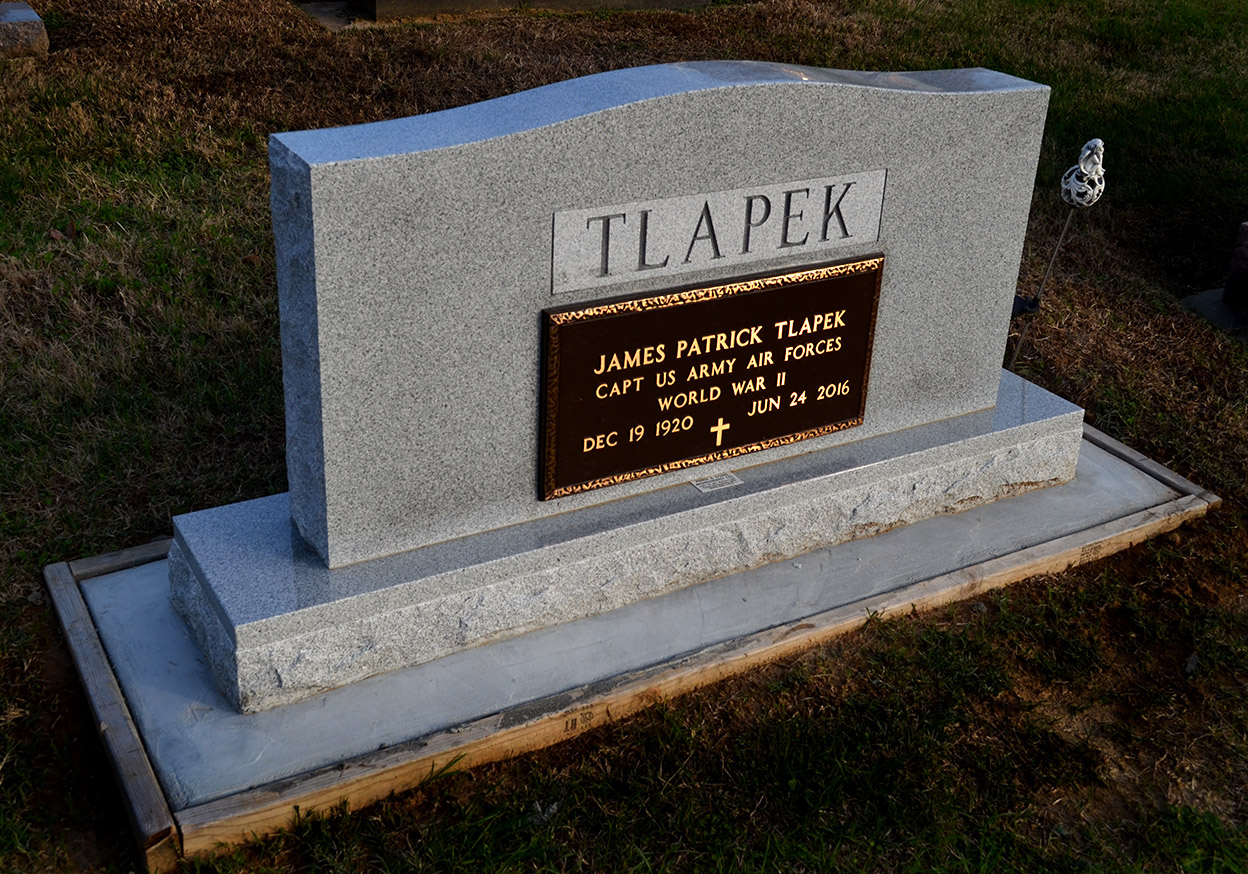
James “Pat” Tlapek earned a long obit in the June 28, 2016, Missourian. It was interesting that his military past didn’t even get a mention, maybe because he had accomplished so many other things in his life.

[He] “took a small auto-parts store in Cape Girardeau and watched it grow into business that spans four states. He also contributed to the community through time and donations throughout his life. Tlapek bought Auto Tire and Parts in 1948, when it was one store in Cape Girardeau. Over the years, he expanded, opening a store in Sikeston, Missouri, then adding a parts warehouse. He sold the business to his son John Tlapek in the 1980s, but he remained involved in the company. It has grown to 49 stores in four states with more than 300 employees.”

Paul Scherer Sr.
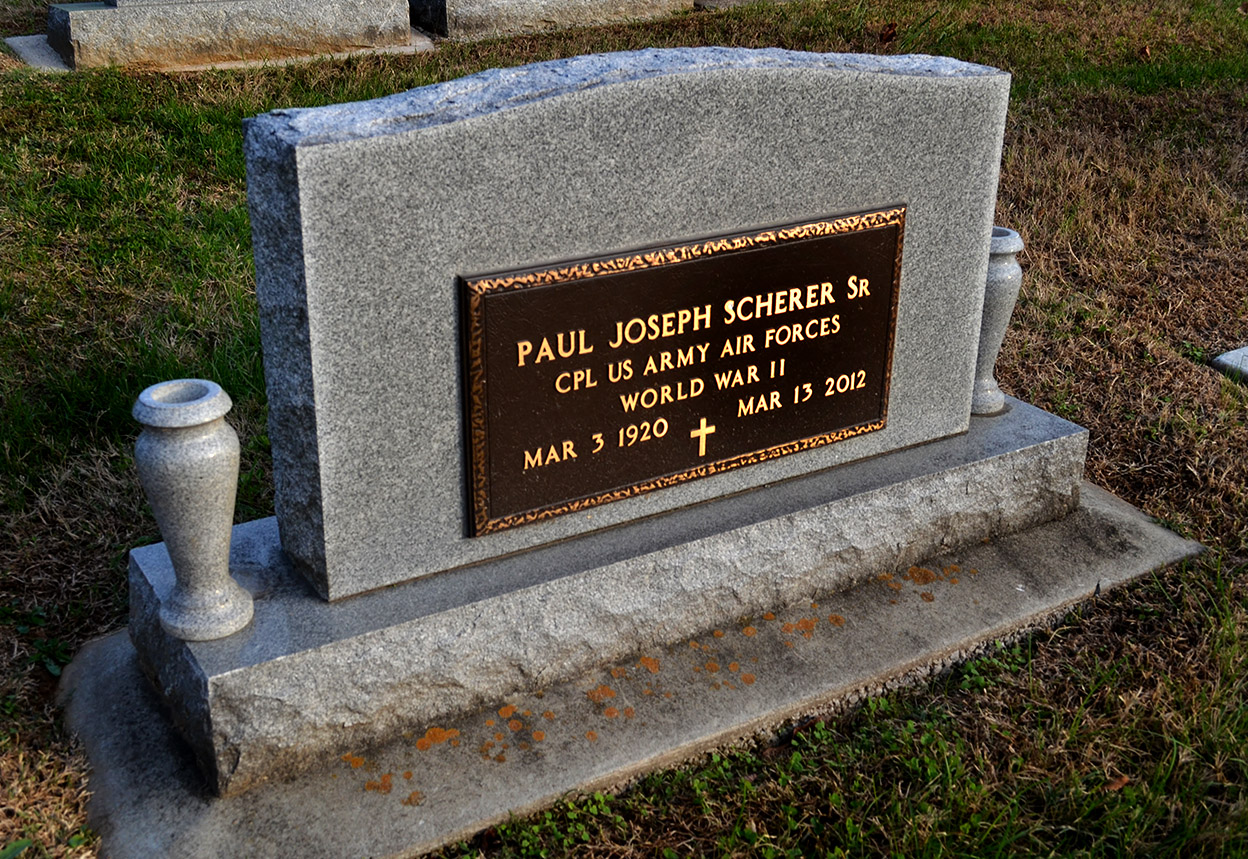
A March 14, 2012, Missourian obituary said that Paul Scherer Sr., was born in Advance in 1920, and served in the Army Air Corps during World War II. It reported that he was production manager at Davis Electric, worked as a carpenter, and was an avid gardener.

John W. Byrne
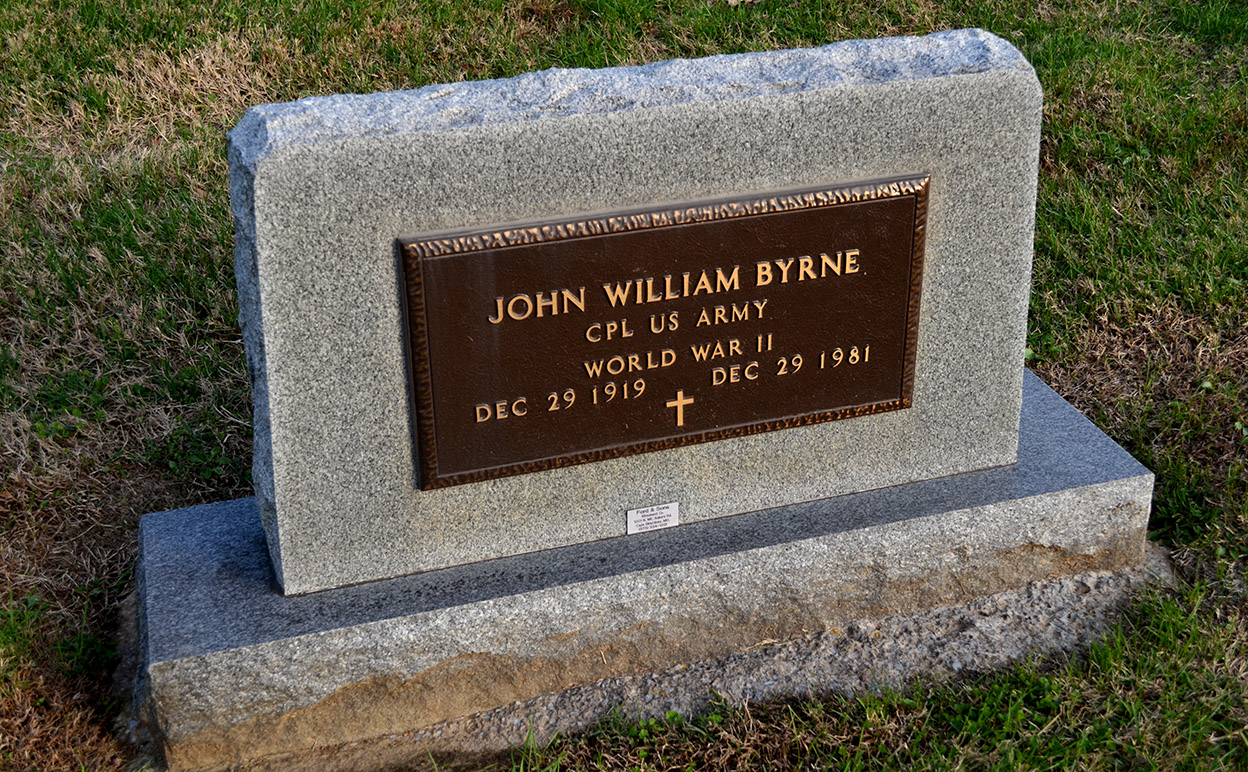
The Dec. 31, 1981, obit said that John W. Byrne came to Cape Girardeau with the Phillips Petroleum Co., and later became assistant administrator at St. Francis Medical Center. He moved to Jefferson City in 1975, and became medical services coordinator for the Missouri Department of Corrections.

Freeman E. Moyers
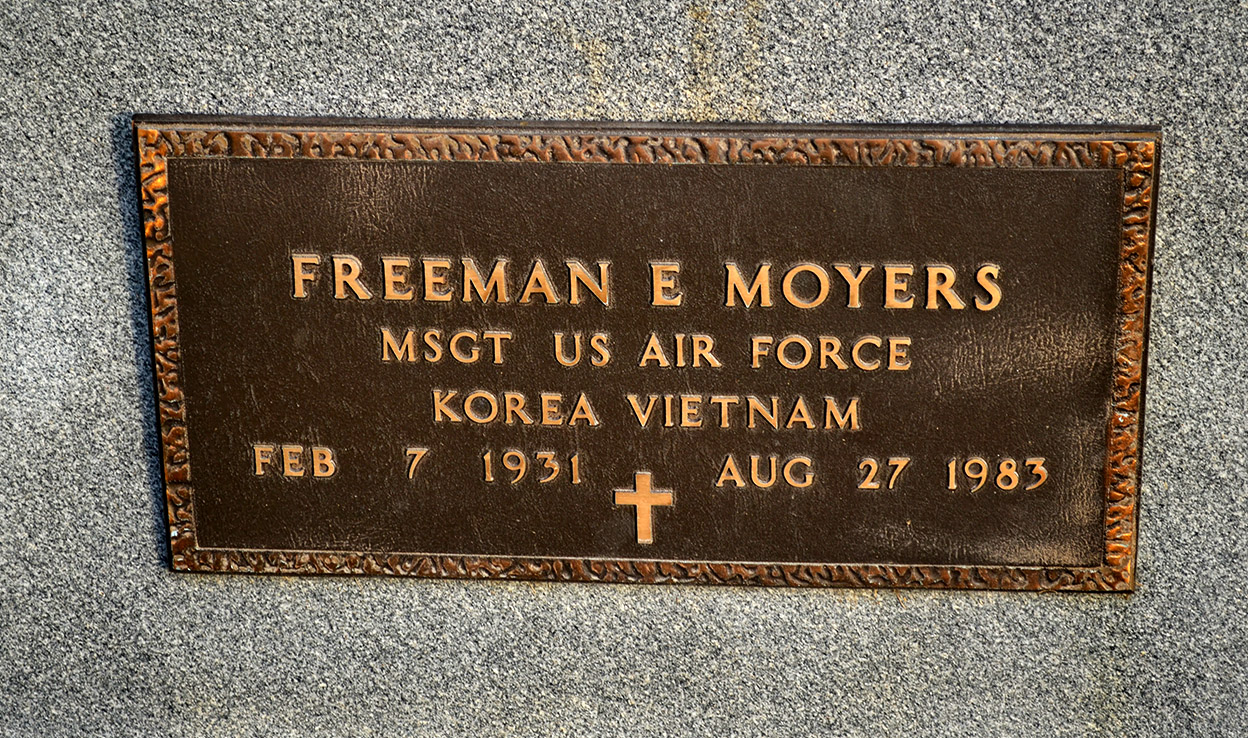
Freeman Eugene “Gene” Moyers, served in the Air Force during both the Korean and Vietnam wars. After he retired as a master sergeant in 1970, he worked for the Missouri Department of Natural Resources. He was superintendent of Trail of Tears State Park for three years.

Leon Jansen
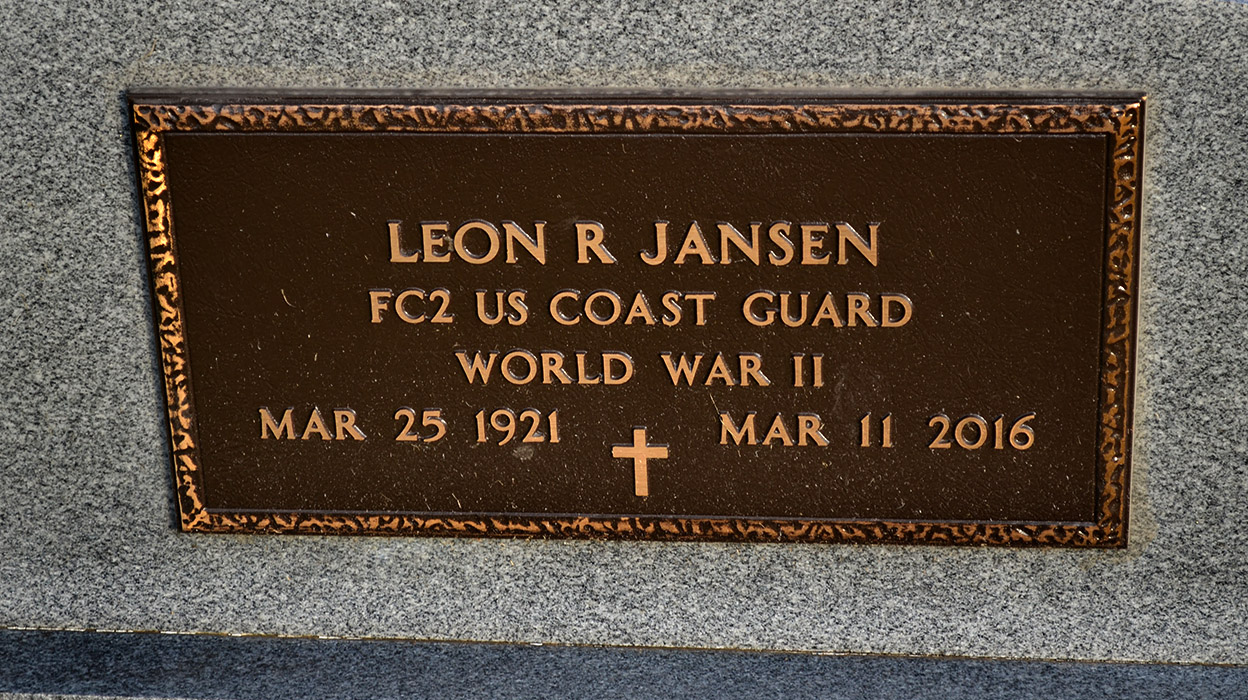
Leon Jansen served aboard a Coast Guard patrol frigate during World War II. When he returned home, worked for Midwest Dairy. In 1959, he started B&J Refrigeration. He established Jaymac Equipment in 1963, which was one of the longest-established Carrier dealers in the country.

Merlin B. “Bud” Schloss
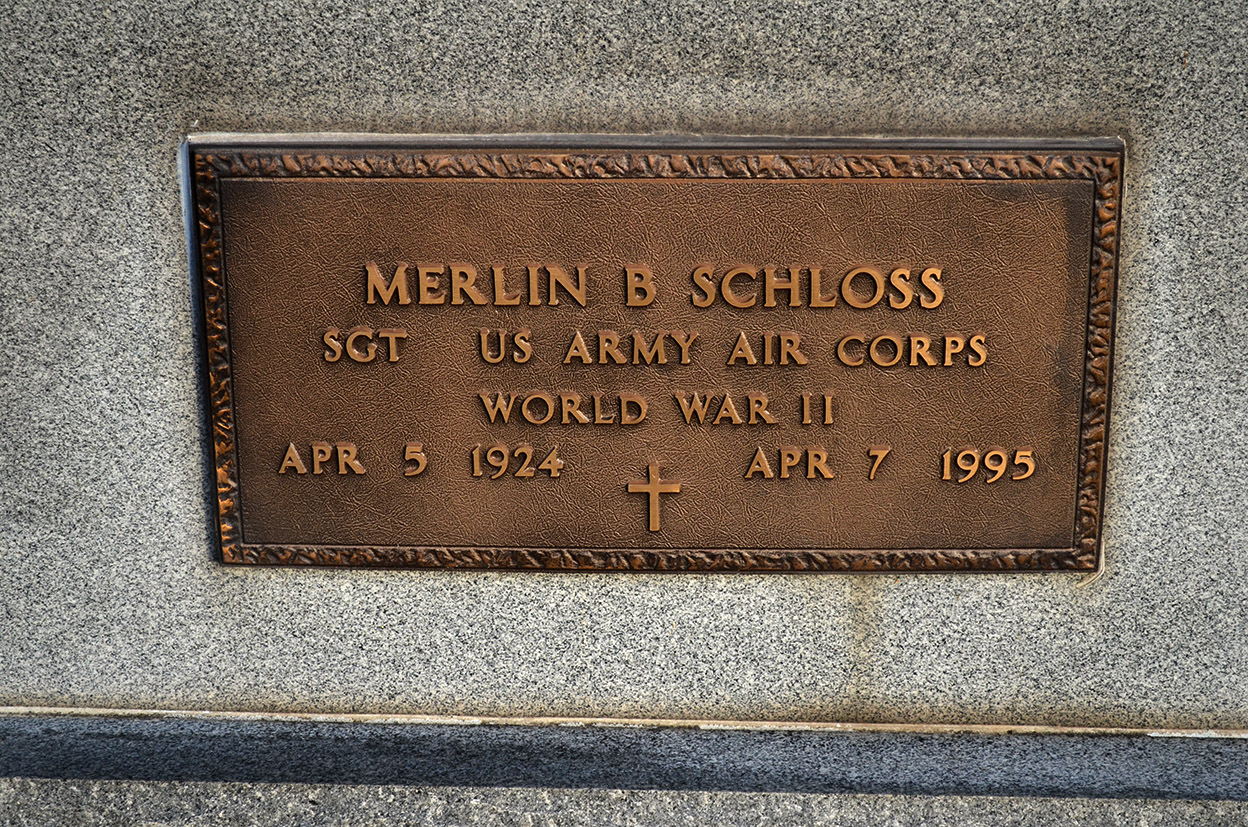
Merlin B. Schloss served with the Air Force in England, France and Germany from 1943 to 1946. Mr. Schloss worked as a route salesman for Locke Distributing for 25 years, then for Bluff City Beer, until he retired in 1977. He worked part-time for Bi-State Southern Oil Co. after retiring.

John W. Dean
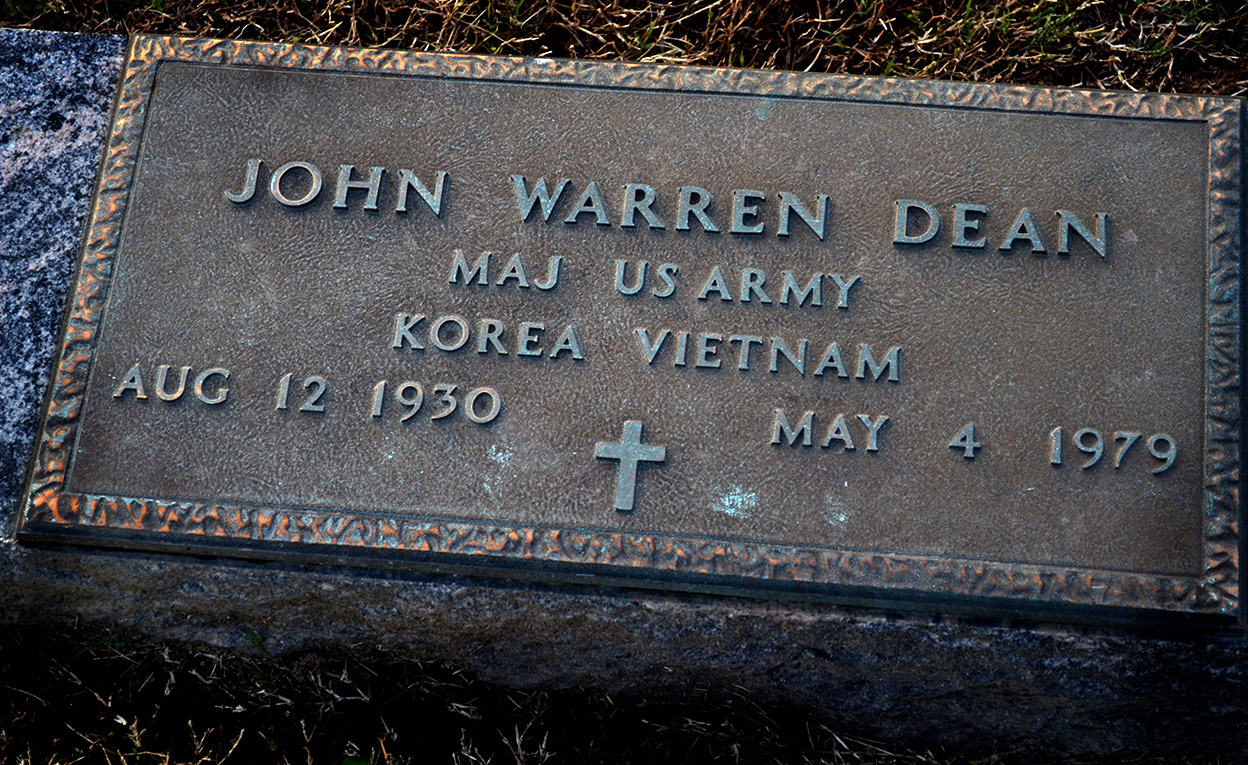
John W. Dean, spent 18 years with the Army Nurse Corps, served in both Korea and Vietnam, and retired with the rank of major. He was director of nursing at St. Francis Medical Center for two years, then opened the Sub and Suds in 1978.

Raymond C. Seyer
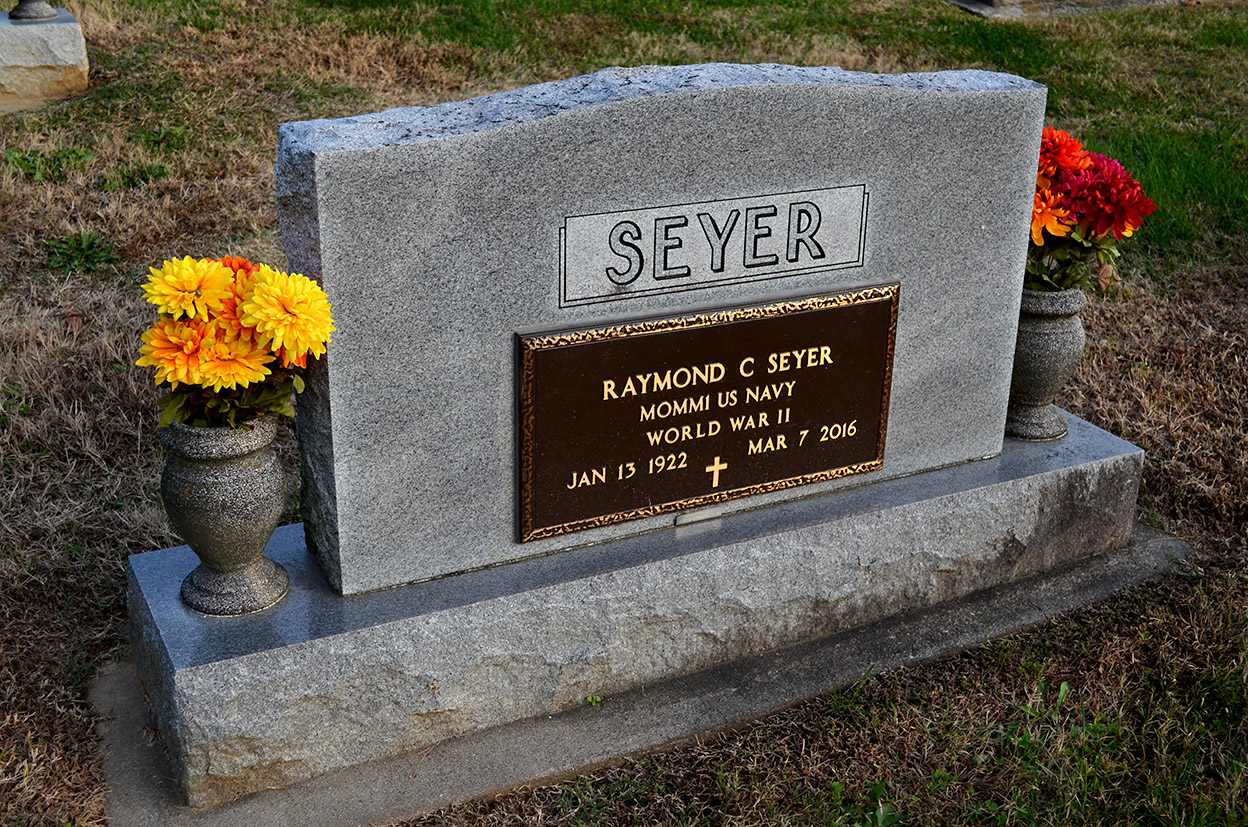
I had to pause a few extra minutes in front of Ray Seyer’s stone. I didn’t have to look up his obituary. I knew him as Wife Lila’s favorite uncle. He was the consummate storyteller. I wrote at the time of his death, “You could tell when Ray was going to let loose with a good one by the way he’d get this half-grin with his lower lip pooched out just a little bit; then the crinkles would show up in the corners of his eyes. That’s a sign of a man who has laughed well and often.”

I had the pleasure of spending an afternoon with Lila, Ray, Mother, and Aunt Rose Mary. I had the foresight to keep a video camera running while Ray was talking about growing up in Swampeast Missouri, serving in the Navy and developing a low opinion of Rush Limbaugh. You can find them at this link.




South Kingshighway Erasures

Wow, you leave town for a couple of weeks and stuff disappears all over the place. I caught these three business landmarks being erased in the South Kingshighway shopping center south of William Street.

It’s all part of a plan to expand Hobby Lobby and to create a driveway to access the center off William.

The first building to be attacked was the EZ Express Carwash on the corner. I don’t think my vehicles ever passed through there, but that’s because I consider dust to be a paint protector. You can click the photos to make them larger.

Pizza Hut being nibbled

The only memory I have of the Pizza Hut is when one night I pulled there in just as a guy pitched a bunch of fast food debris out his car window. Putting on my most benign, helpful face, I tapped on his window, handed him his junk and said, “Excuse me, sir. I think you may have dropped these.” He was so flummoxed he not only took the bags, but he thanked me.

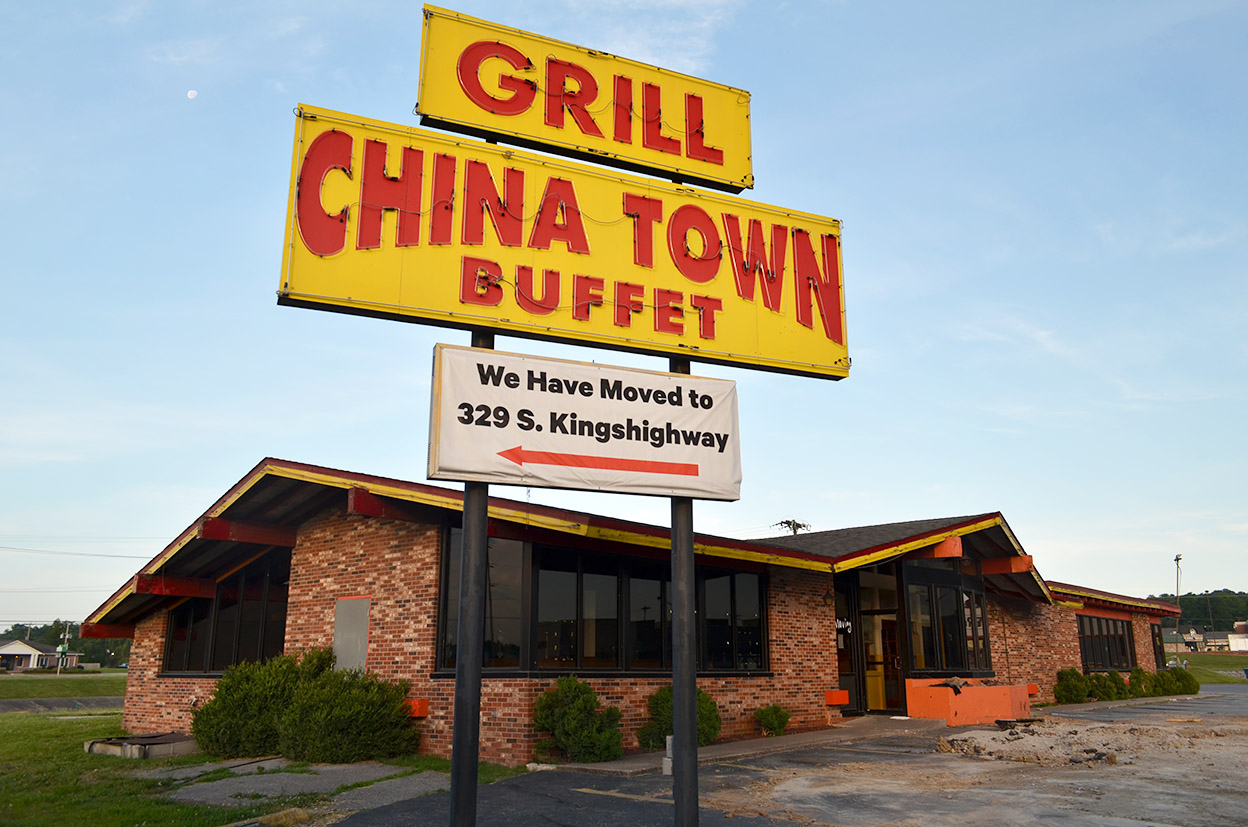
China Town Buffet moved

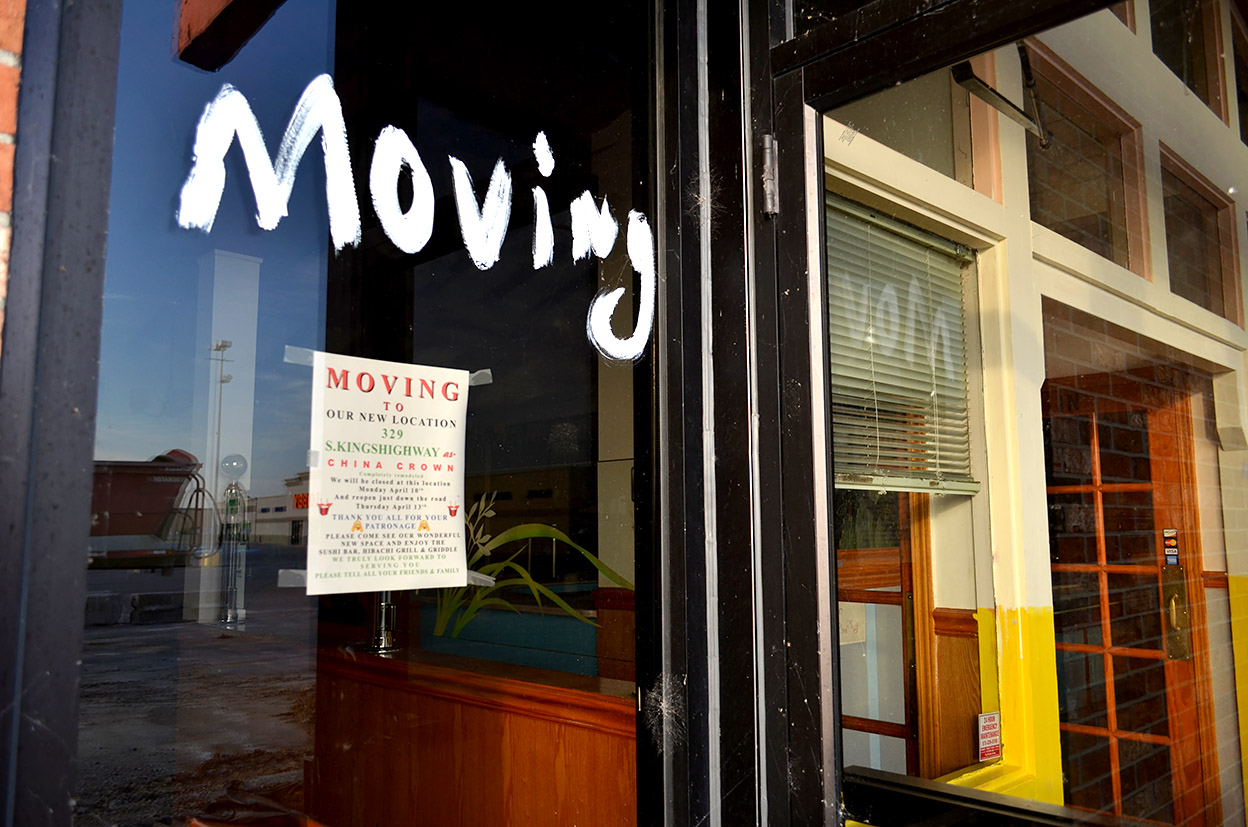
A sign in the window said the business was going to move to 329 S. Kingshighway under a new name – the China Crown.

I found this blurb on a real estate site: “China Town Buffet plans to eventually move a block south of their present location according to Tom Kelsey, commercial broker with Lorimont Place, Ltd.  Kelsey said his company recently brokered the sale of the former Pagoda Gardens property at 329 S. Kingshighway to Jerry Feng, owner of China Town Grill Buffet, currently operating at 213 S. Kingshighway.

“The former Pagoda restaurant operated at the location since 1987 and closed in 2014 when the owner Sam Prasanphanich retired from the restaurant business after 30 years. Ironically, Pagoda was the first restaurant in the Southeast Missouri area to offer a Chinese buffet. Feng and his family will carry on the Chinese buffet concept at their new location. The Lorimont broker understands the new buyers will make significant renovations both inside and out at the former restaurant building and this most likely will involve several months of construction before they relocate and begin operations there.  No sales price was disclosed, but the Lorimont Place website lists the property price at $619,900.”

Gallery of vanishing businesses

Click on any photo to make it larger, then use your arrow keys to navigate around.

World War I Comes Home

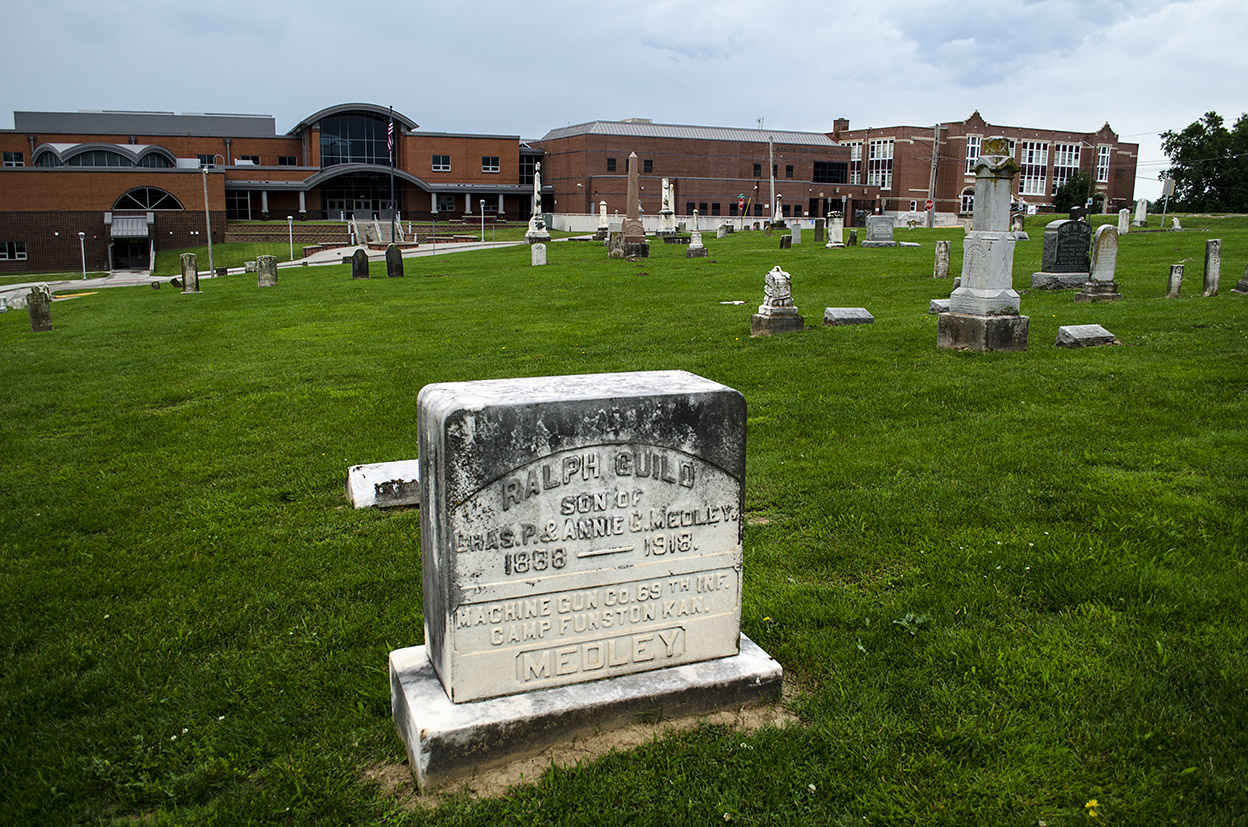
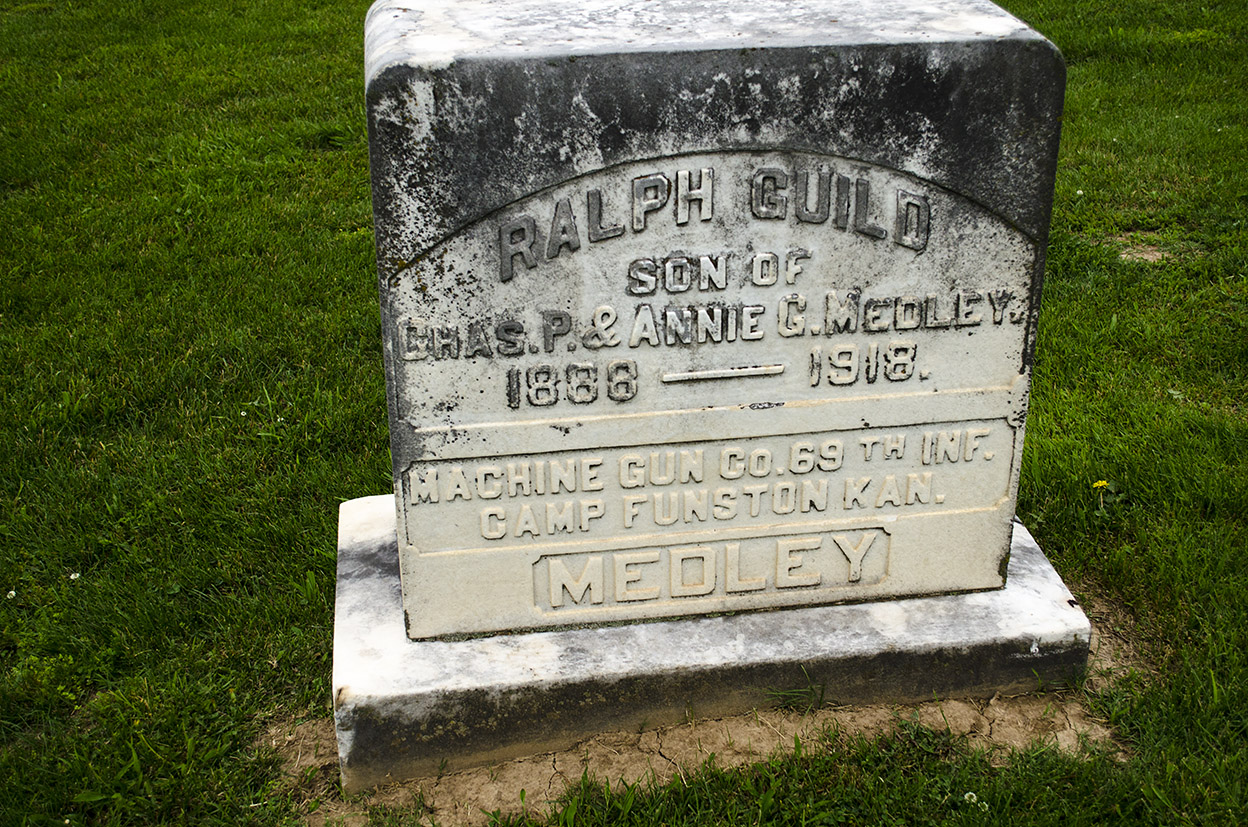
I had heard the old Jackson High School was going to be torn down, so I wanted to see if they had started demolition yet. While there, I wandered around in City Cemetery, which is in front of the school. I was looking for graves of servicemen for a possible Memorial Day post. I found plenty there and in Russell Cemetery, but this happened to be the first I researched. It stopped me in my tracks. I’ll save the others for later. Click on the photos to make them larger.

From Page 4 of the October 16, 1918 Southeast Missourian:

Yesterday afternoon, perhaps more forcibly than ever before, the fact that we are in war was brought to the mind of the citizens of Jackson when two caskets, each draped with old glory, were taken from the Iron Mountain train at the same time. As if a hush had fallen over the city, all was still, and the large crowd assembled stood about in respectful silence.

The body of Ralph (Ray) Medley was taken to the home of his parents, Mr. and Mrs. Charles P. Medley, south of the city, and was in charge of Maple Stevenson, the death soldier’s comrade in training camp. the other body, that of Arthur Winter, which was in charge of a sergeant from Fort Grady, Mich., was taken to the city cemetery, and was given a military funeral by the Jackson Home Guard, the first military funeral seen in Jackson by the present generation….

A splendid young man

The funeral of Ralph Medley was held today at 9:30 at the city cemetery, and the attendance was a large one. A mound of flowers also marks the last resting place of this young man, who gave his life to his country. Ray was a splendid young man, quiet and unassuming, a true farmer boy who combined hard work with a good education, and by this combination had begun to make a success as a farmer, when the call to arms came, and he began to fit himself for the service, only to be laid low by the dread disease now sweeping over the land.

Arthur G. Otto Winter

I didn’t know to look for Arthur G. Otto Winter’s stone, but I did find two stories about him in The Missourian.

October 12, 1918: Otto Winter, one of the young men in the army from this city, died at Fort Grady, near Sault Sainte Marie, Mich., yesterday afternoon, the influenza and pneumonia causing his death. He was sick only a few days. Otto was about (…) years old and was the son of Mr. and Mrs. Gottfried Winter, both of whom are dead. One sister, Mrs. Laura Winter, lives here and another, Mrs. Ben Pletl, at Cape Girardeau. Other relatives live in Perry county, from whence the family came to this city some twenty years ago.
The young man was sent into training camp from the county during the summer months and was a private in Company A, 18th Battalion of Infantry, stationed in the fort above given. He was an employe of the milling company here from the time he was old enough to fill a position until his entrainment for camp.

October 16, 1918: (from the story above about two Jackson boys coming home): Rev. W.G. Langehennig of the Lutheran church officiated at the grave, and at the conclusion of the short ceremony, bugler Lail stepped up and sounded taps, while the men of the home guard stood at “parade rest” with bowed heads. The floral offerings were profuse and beautiful, showing that the citizens of Jackson know how to honor their soldier dead, even if they occupied a lowly station in life, like Arthur Winter, who was a day laborer before his entry into the army. Tthe flag in the courthouse yard was at half mast during the funeral. 


Freedom Rock

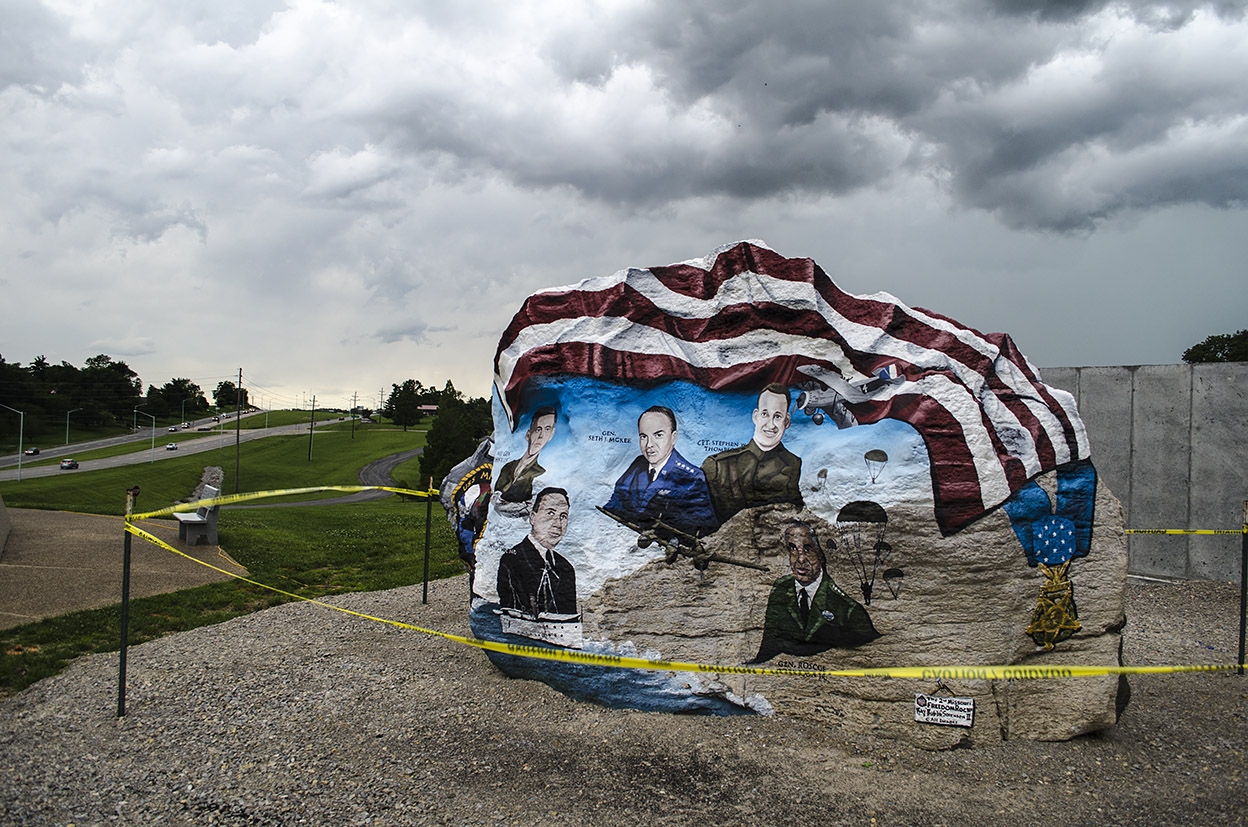
My eye kept being drawn to something colorful under the huge flag at North County Park.

The weather geeks had been promising stormy weather for Saturday, which included 70 mph winds and golfball-sized hail. When the radar started looking nasty, I decided to go mobile to get the car under cover if the hail really did arrive. That gave me an excuse to cruise by the park, but still stay close to my hidey-hole.

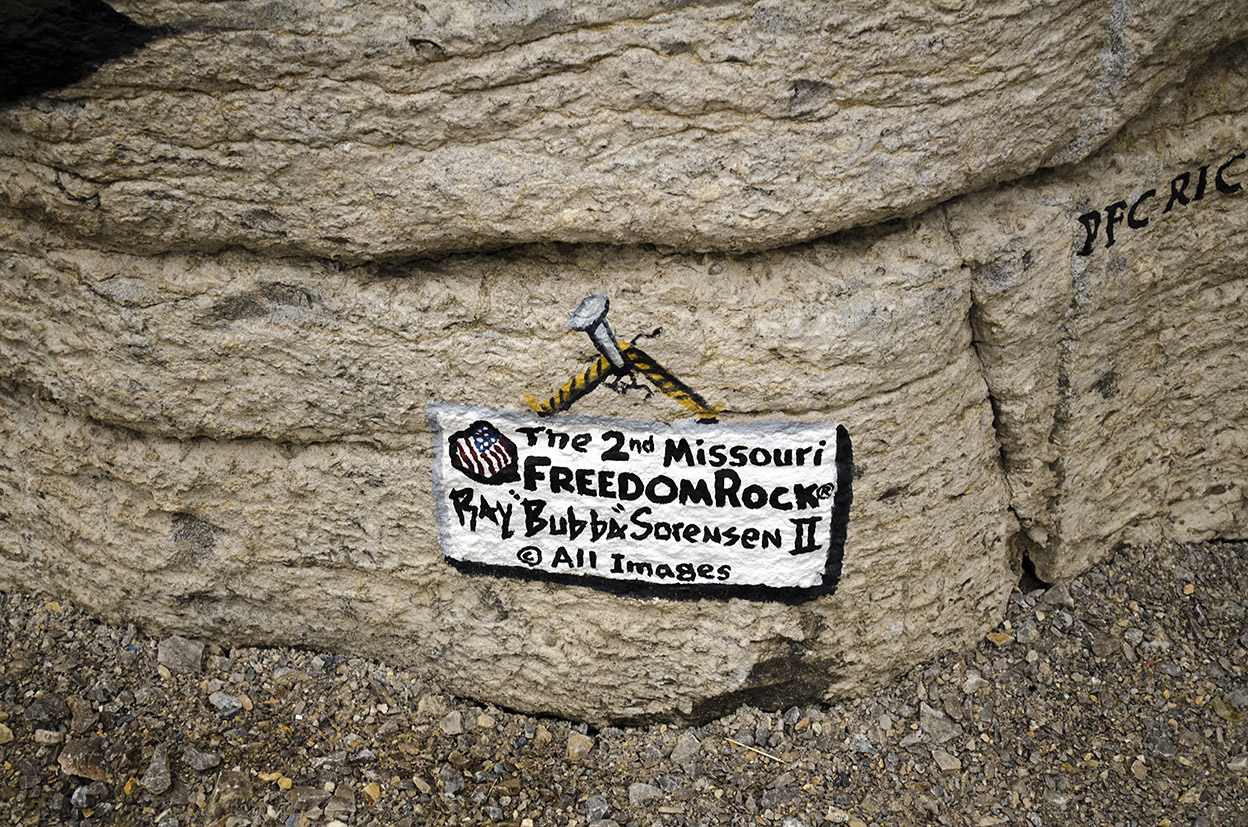
Work done by ‘Bubba’ Sorensen II

The Freedom Rock artwork was done by Ray “Bubba” Sorensen II on a 32-ton limestone boulder that came from the Buzzi Unicem quarry. He painted his first rock in 1999 in his home state of Iowa. This will be his 59th creation, only the second in Missouri. All but three of the 59 are in Iowa. You can get the whole story in a Southeast Missourian piece by Mark Bliss.

Click on the photos to make them larger.

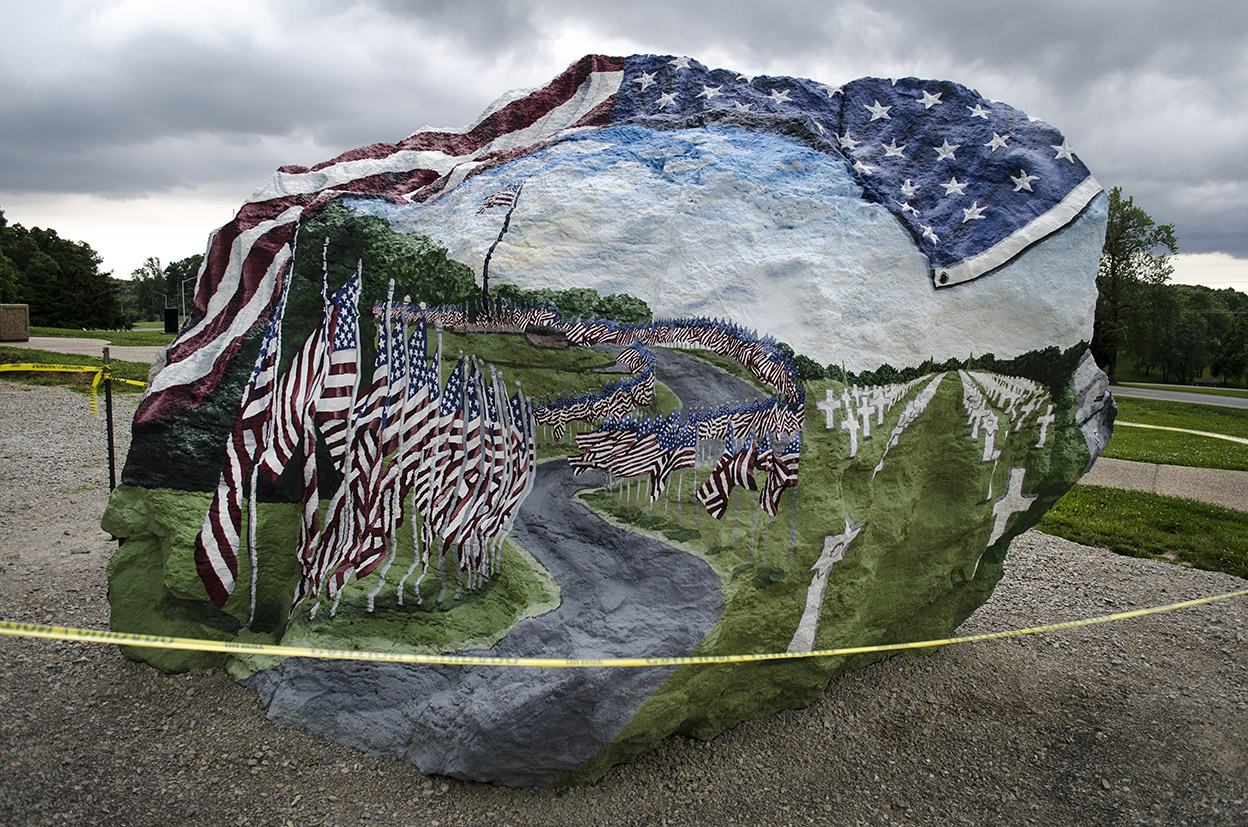
Back depicts avenue of flags

The back of the stone has a rendition of the veterans’ flags donated by their families and displayed on holidays.

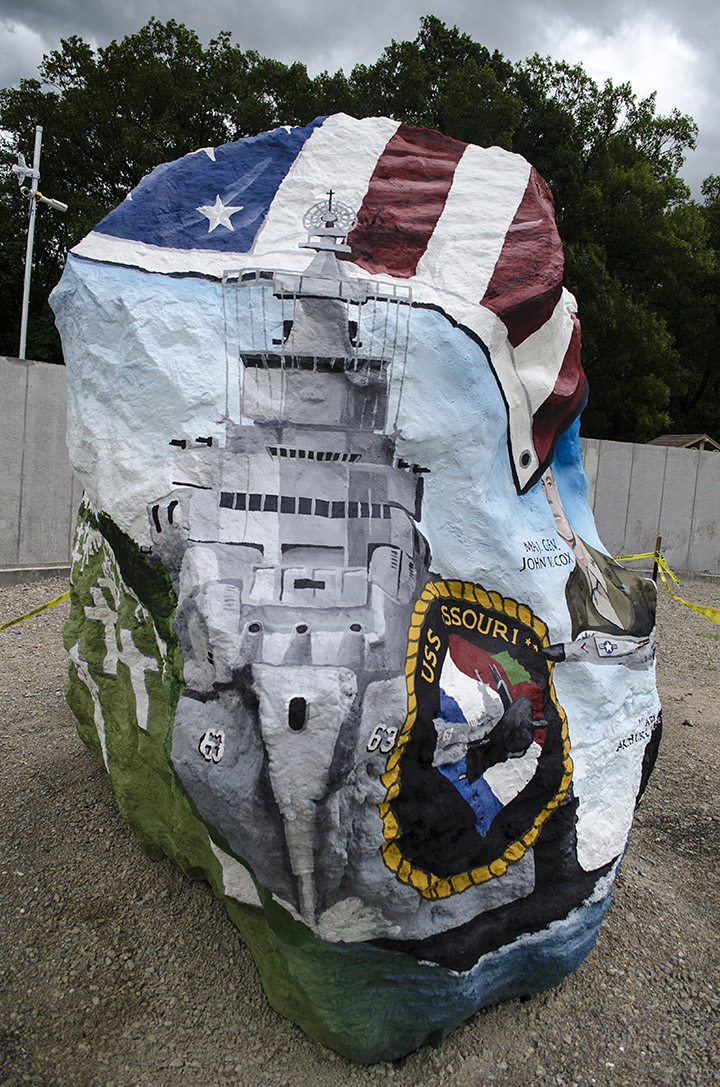
Battleship USS Missouri

The Battleship USS Missouri appears on one end of the stone. It was on the deck of that ship that the Japanese signed the surrender that ended World War II.

Cox and Willard

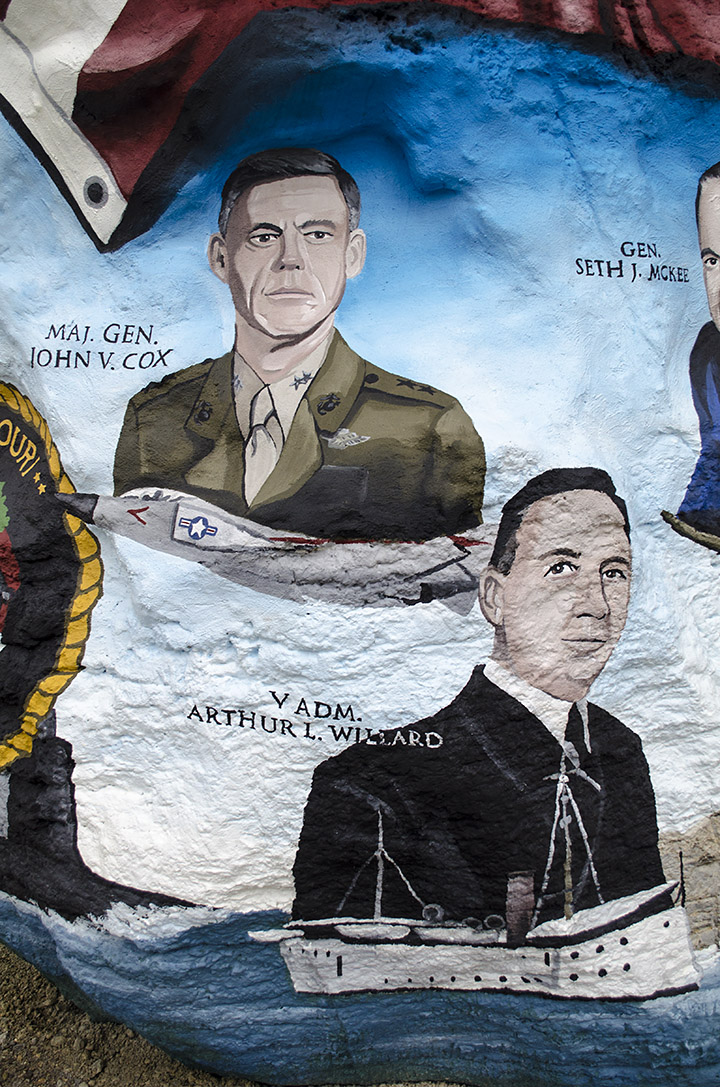
Prominent Missouri military men are recognized. Maj. Gen. John V. Cox was born and raised in Bevier, Mo., in Macon County. He joined the Marines in 1952, and served two tours in Vietnam, where he flew 200 combat missions, and logged 4,000 accident-free flying hours.

Vice Adm. Arthur L. Willard’s career almost ended before it started when he and 15 other cadets were expelled from the U.S. Naval Academy over a hazing scandal in 1888. Missouri Congressman William M. Hatch interceded with President Grover Cleveland to get him reinstated. In 1898, during the Spanish-American War, he led a shore party under fire to raise the American flag over a Spanish blockhouse in Cuba. The Missouri legislature presented him with a jeweled officer’s sword for his efforts. (The New York Herald gave him a $100 prize for being the first U.S. serviceman to raise the American flag on Cuban soil.) He received the Navy Cross for being able to solve logistical problems during World War I.

Gen. McKee was a Cape boy

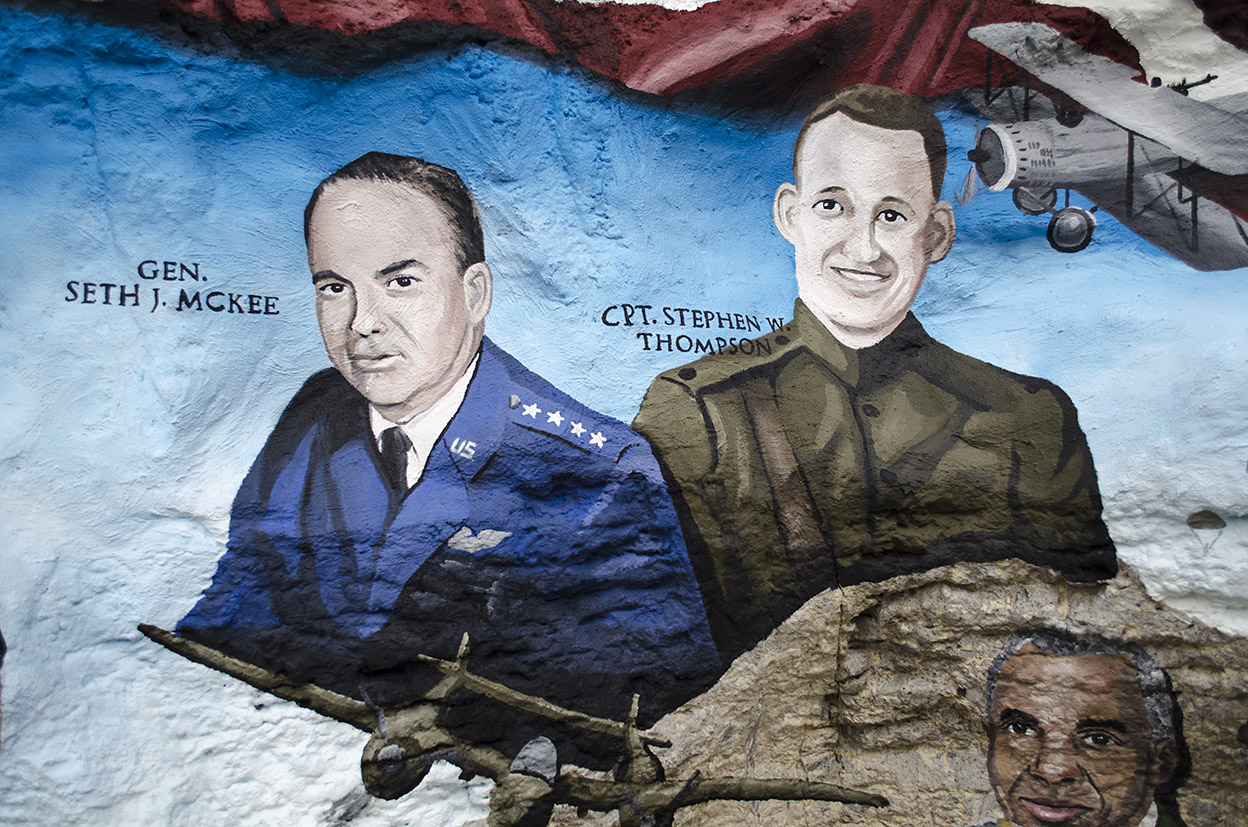
Gen. Seth J. McKee, graduated from Cape Central High School in 1934, and attended Southeast Missouri State College from 1934 to 1937. At the time of his death at 100 in 2016, he was the oldest survivor of the D-Day invasion of France in World War II. He ended his career as commander of the North American Air Defense Command. It is said one of his retirement gifts was a replica of the red phone he would have used to notify the president that the country had come under nuclear attack. Mark Bliss wrote an obituary that contains more details.

Stephen W. Thompson was born in West Plains, Mo., and joined the army when the U.S. entered World War I in 1917. On the way to Virginia for training in the Coast Artillery Corps, he saw his first airplane. After his first flight, he switched to the Air Service. Even though his squadron had not yet begun combat operations, Thompson and a buddy hopped aboard French aircraft to serve as gunner-bombardiers. On that flight, he managed to shoot down an attacking fighter, the first aerial victory by any member of the U.S. military. He was awarded the Croix de guerre by the French government.

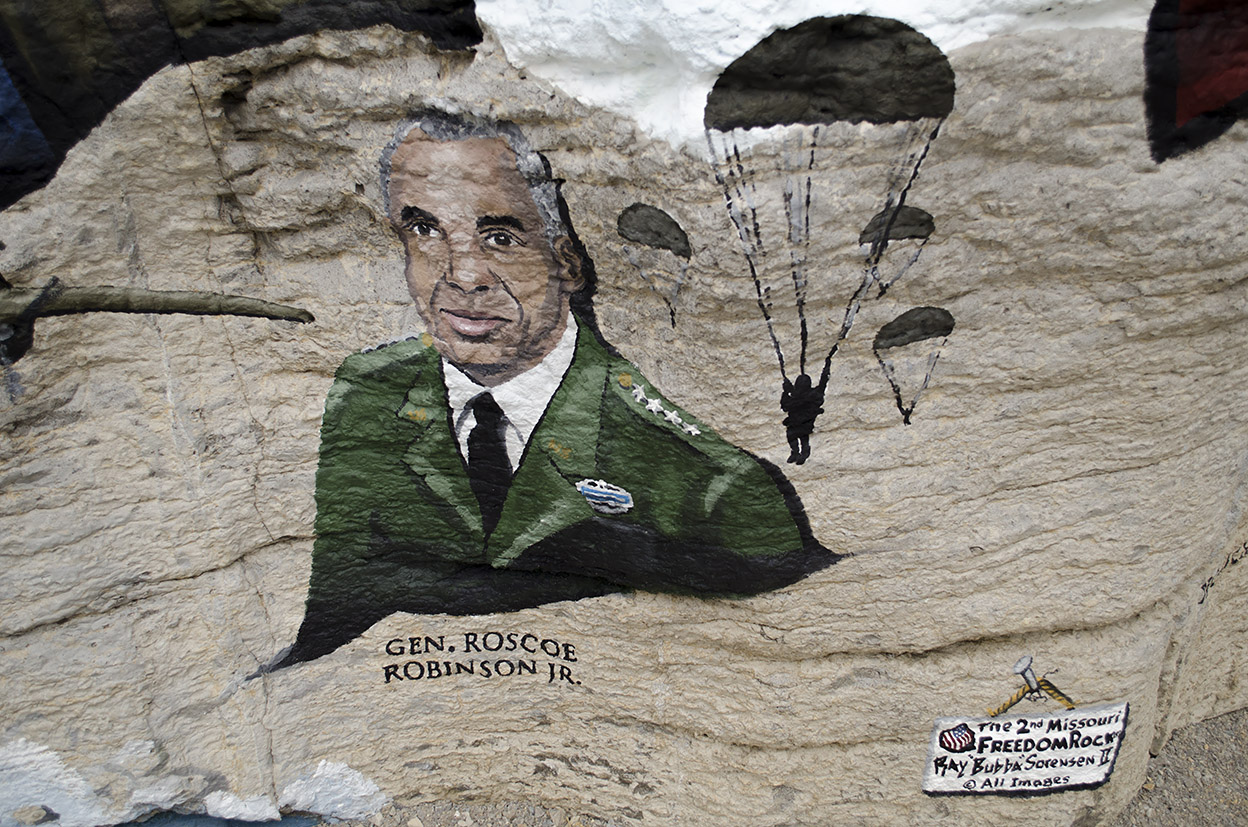
Gen. Roscoe Robinson Jr.

Gen. Roscoe Robinson, Jr., born in St. Louis, was the first African-American to become a four-star general in the U.S. Army. He served as a platoon leader and rifle company commander in Korea in 1952, where he was awarded the Bronze Star. In 1967, he served as a battalion commander in Vietnam. For that service, he was awarded the Legion of Merit, the Distinguished Flying Cross, 11 Air Medals, and two Silver Stars.

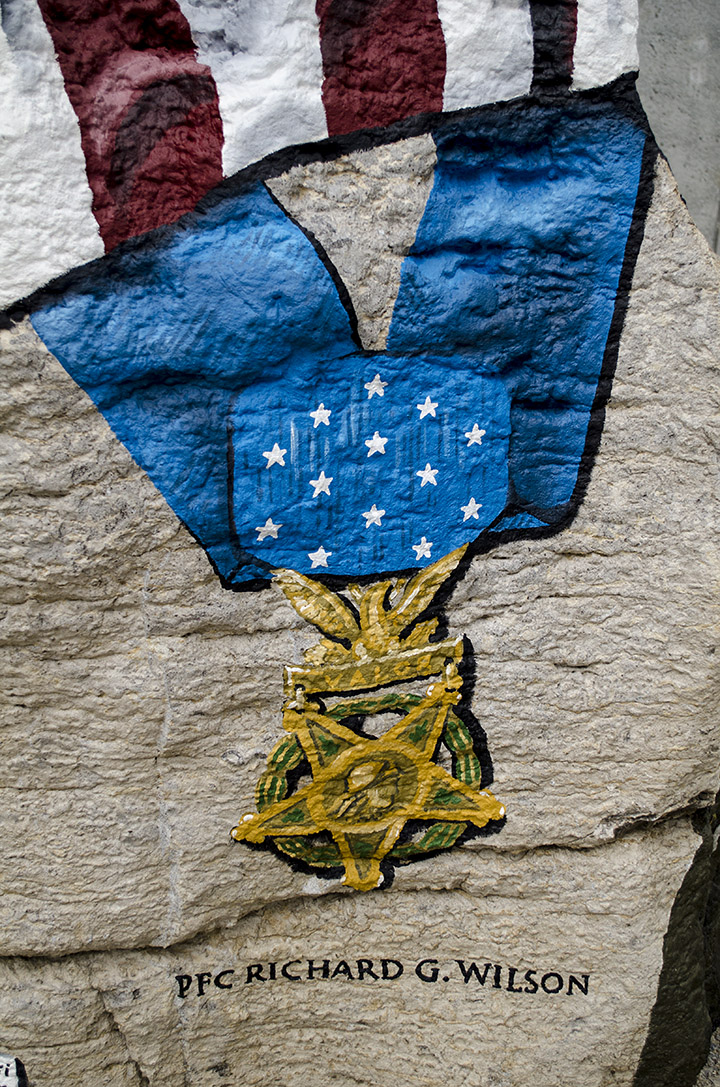
Cape’s Medal of Honor recipient

PFC Richard G. Wilson was born in Marion, Ill., but moved to Cape Girardeau in 1939. He attended May Greene School and Central High School, where he played guard on the football team.

Wilson served in Korea as a private first class with the 187th Airborne Infantry Regiment. On October 21, 1950, he was attached to Company I when the unit was ambushed while conducting a reconnaissance in force mission near Opa-ri. Wilson exposed himself to hostile fire in order to treat the many casualties and, when the company began to withdraw, he helped evacuate the wounded. After the withdrawal was complete, he learned that a soldier left behind and believed dead had been spotted trying to crawl to safety. Unarmed and against the advice of his comrades, Wilson returned to the ambush site in an attempt to rescue the wounded man. His body was found two days later, lying next to that of the man he had tried to save. For these actions, he was posthumously awarded the Medal of Honor on August 2, 1951.